
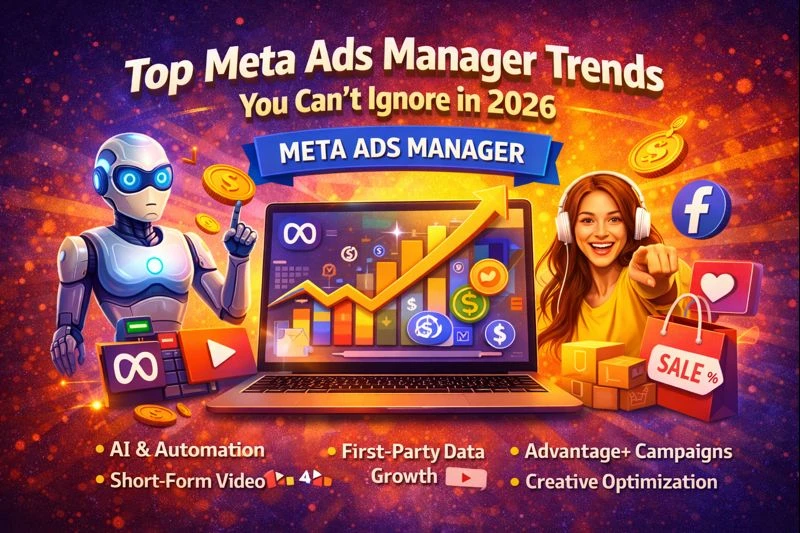
Meta Ads Manager has become the hub of all paid advertising for businesses advertising on Facebook, Instagram, Messenger and Audience Network. Meta Ads Manager is evolving quickly as the competitive landscape grows and user behavior shifts. In 2026, those brands that appreciate and respond to the new Meta Ads Manager will gain an unprecedented edge in performance, growth and ROI.
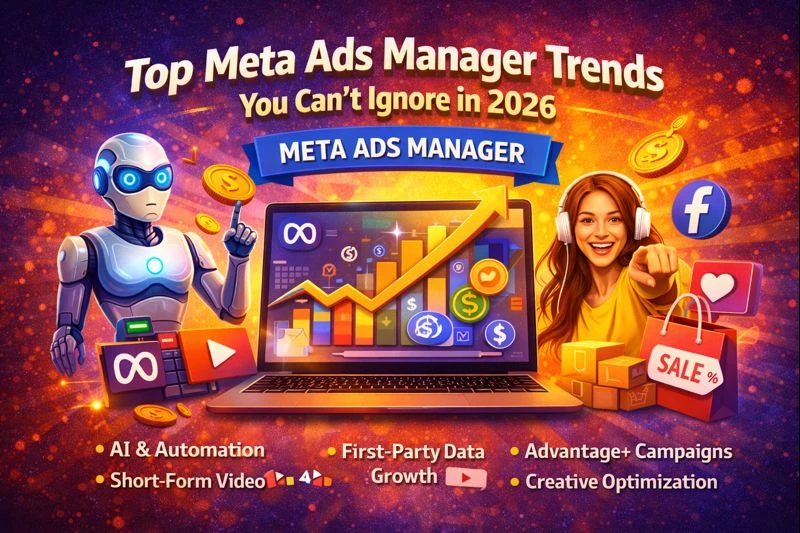
Top Meta Ads Manager Trends You Can’t Ignore in 2026 and How Advertisers Can Make the Most of Them. This post looks at the top trends that are shaping how advertisers use Meta Ads Manager.
1. AI-Powered Automation Inside Meta Ads Manager
The core of Meta Ads Manager has now become artificial intelligence. By 2026 audience targeting, budget allocation, creative delivery, and placement optimization will all be carried out automatically with AI more efficiently than doing these things manually.
Manuscripts like Advantage+ campaigns enable Meta Ads Manager to automatically test audiences and placements. This has been shown to increase results through very little human intervention. Advertisers who do not resist but rather take advantage of automation will achieve better scalability as a result and have to bear less cost in return.
2. Privacy-First Advertising Becomes the Standard

As data privacy regulations become more stringent, Meta Ads Manager is shifting toward privacy-first advertising. Third-party cookies are gradually approaching their endpoint, which now makes first-party data more important than ever.
Important privacy-based tools in Meta Ads Manager include:
- Data modeling
- Aggregated Event Measurement
- Consent-based tracking
Brands that respect user privacy while optimizing ad delivery will perform better long-term.
3. Meta Conversions API Is No Longer Optional
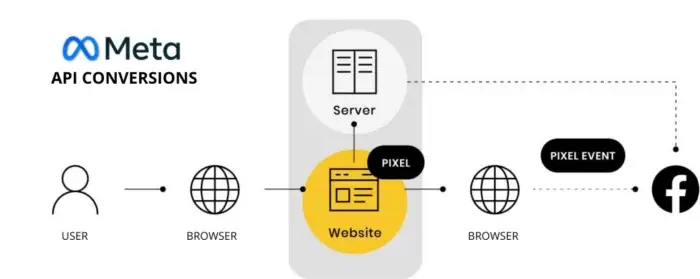
In 2026, the Meta Pixel will not be sufficient. Meta Ads Manager is heavily leaning on Conversions API (CAPI) for tracking precision.
Meta Ads Manager with Pixel and CAPI:
- Improves event accuracy
- Reduces data loss
- Strengthens campaign optimization
Companies that don’t adopt CAPI won’t be able to rely on conversion data.
4. Short-Form Video Ads Dominate Meta Ads Manager

Short-form vertical videos remain the top-performing format inside of Meta Ads Manager. Reels, Story ads, and mobile-first creatives are dominating attention across platforms.
To succeed with Meta Ads Manager in 2026, brands must :
- Create authentic video content
- Focus on fast hooks
- Optimize for sound-on viewing
Static ads are losing effectiveness in comparison with dynamic video creatives.
5. Creative Testing Matters More Than Targeting
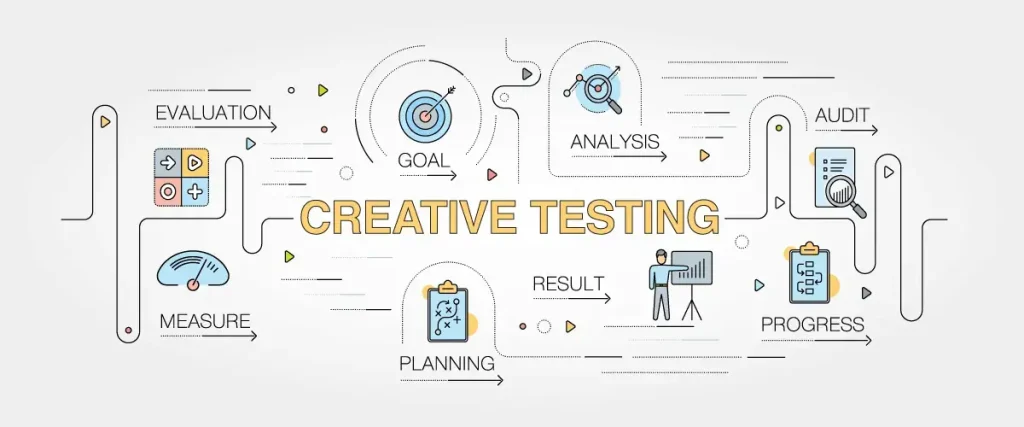
With targeting options decreasing, Meta Ads Manager places a high value on creative performance. Instead of over-segmenting audiences, it now encourages the testing of a variety of creatives by an advertiser.
Winning Meta Ads Manager strategies include:
- UGC-style ads
- Native, non-promotional visuals
- Multiple ad variations per campaign
Today, creative quality is the biggest performance driver.
6. Advantage+ Campaigns Become the Default
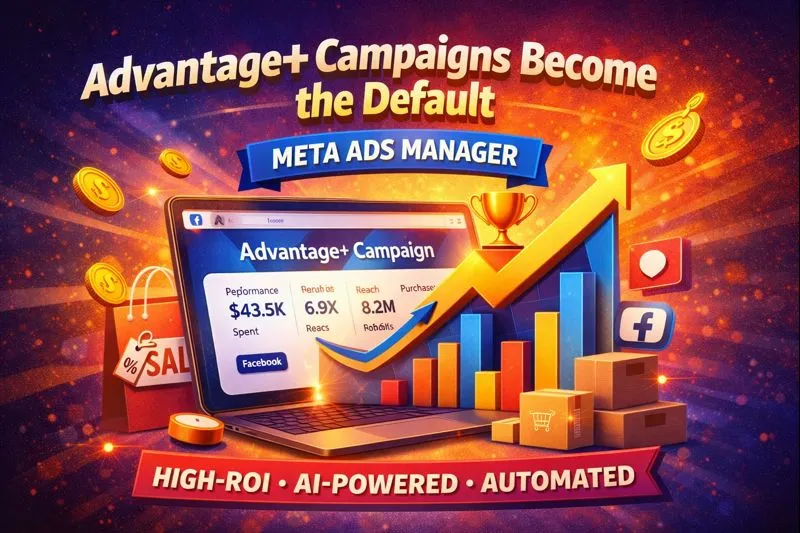
Advantage+ Shopping and Lead Campaigns are being highly promoted by Meta inside Meta Ads Manager. Using AI, these campaigns automatically optimize the delivery across audiences and placements.
In 2026, Advantage+ campaigns help advertisers:
- Scale faster
- Reduce manual effort
- Boost ROAS
Clearly, Meta Ads Manager is moving toward automated campaign structures.
7. Omni-Channel Attribution Improvements

Meta Ads Manager is developing new attribution models. that will enable tracking of customer journeys across different devices and platforms. Advertisers can now better measure how ads influence conversions beyond the last click.
Improved attribution helps brands:
- Allocate budgets smarter
- Understand real conversion paths
- Improve long-term strategy
This makes Meta Ads Manager more business-focused than ever.
8. Creator & Influencer Ads Inside Meta Ads Manager
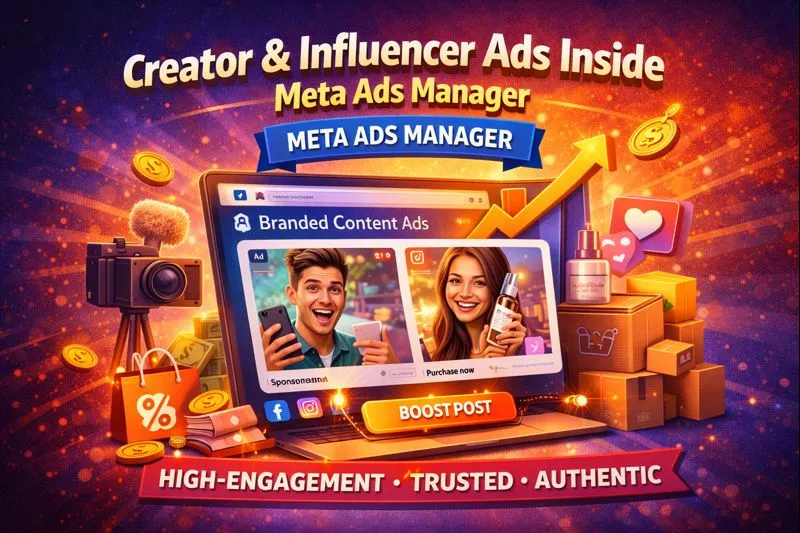
Influencer-style ads outperform traditional brand creatives. In 2026, Meta Ads Manager will allow brands to run branded content ads using creator-generated videos.
The ads provide three benefits, which include:
- The ads deliver Higher engagement
- The ads create Stronger trust
- The ads result in better conversion rates
Meta Ads Manager now considers creator partnerships as an essential growth strategy.
9. AI Copy & Creative Suggestions
Meta Ads Manager is launching AI-based tools that generate ad copy and headlines and design recommendations for advertisements. The tools enable marketers to create campaigns more efficiently while they assess campaign effectiveness.
Yet advertisers who achieve success need to use AI recommendations together with their creative abilities because they want to keep their brand identity intact.
10. Performance Metrics Over Vanity Metrics
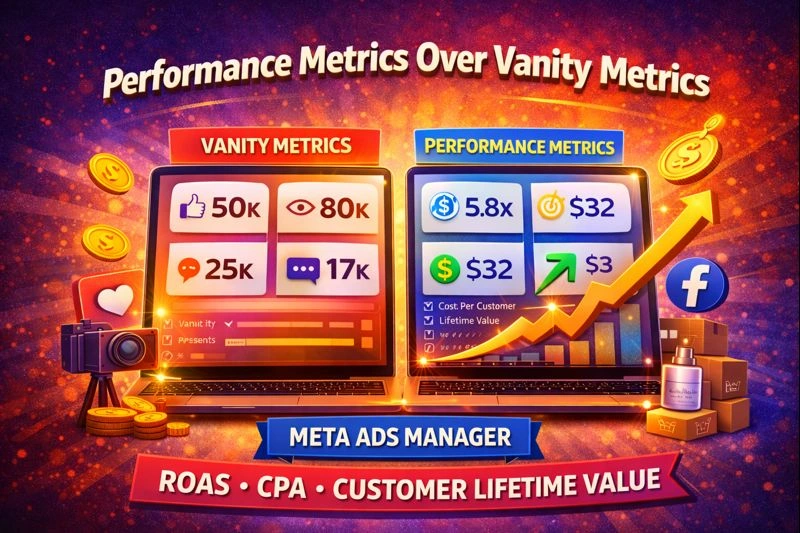
Meta Ads Manager will change its reporting system in 2026 to focus on business results instead of basic performance measurements. Advertisers are prioritizing:
- ROAS
- CPA
- Customer lifetime value
The value of clicks and impressions has decreased because businesses now focus on profitable conversions.
Conclusion
The Meta Ads Manager system will evolve into its 2026 version through four main forces, which include automation, artificial intelligence, privacy-first data approaches, and creative excellence development. Brands that adapt to these Meta Ads Manager trends through Advantage+ campaigns, Conversions API implementation, video creative development, and real performance metrics assessment—will achieve success in paid advertising.
Meta Ads Manager is no longer just an ad platform. The platform functions as an intelligent digital brand growth engine that uses artificial intelligence to help businesses develop their advertising operations in a changing market.
For more SkyHoora
To look for related content, follow dplustrue
Read more blogs