

Every week, a small business owner somewhere decides to “get serious about digital marketing.”
They set up an Instagram page. They boost a post. Maybe they hire someone on Fiverr to run Google Ads. A month later, they’ve spent ₹15,000 — and have little to show for it.
Sound familiar?
Here’s the uncomfortable truth: the problem usually isn’t the platform, the budget, or even the ad creative. The problem is the approach.
In 2026, digital marketing has become more competitive, more algorithm-driven, and more expensive to get wrong. Small businesses that succeed online are doing a few fundamental things right — and those that fail are making the same predictable mistakes, over and over.
This article breaks down exactly what’s going wrong, why it keeps happening, and what you can do differently — starting today.

The Real Problem: Digital Marketing Isn’t the Issue — The Approach Is
Let’s get something straight first.
Digital marketing works. It works for massive corporations, and it works for one-person businesses selling handmade jewelry from a spare bedroom. The channel isn’t broken.
What breaks things is the way most small businesses use it.
Why Having a Facebook Page Is Not the Same as Having a Strategy
Millions of small businesses have a Facebook page. Very few of them have a strategy.
A page is infrastructure. A strategy is a plan for how you move a specific person — someone with a specific problem — from “I don’t know this business exists” to “I just gave them my money.”
When businesses skip the strategy and jump straight to posting, they end up creating content for themselves, not for their customers.
The Gap Between Posting Content and Actually Reaching Customers
In 2026, organic reach on most social platforms has shrunk significantly. A Facebook post from a business page might reach 2–5% of followers. An Instagram reel might do better — but only if it’s designed for the platform’s algorithm, not just shared because it looked good.
Posting content and reaching the right people are two completely different activities. One is publishing. The other is distribution.
Most small businesses are very busy publishing. Very few have thought about distribution.
What Small Business Owners Misunderstand About How Digital Marketing Works
Here’s a mental model that helps: digital marketing is not advertising. It’s a system.
Advertising is one part of that system — the part where you pay to get attention. But if the website that attention lands on is slow, unclear, or untrusted, the ad spend was wasted. If there’s no follow-up email sequence, no retargeting, no way to capture the lead — the attention was wasted too.
Most small businesses only fix one piece of the system. Then they wonder why the whole machine doesn’t run.
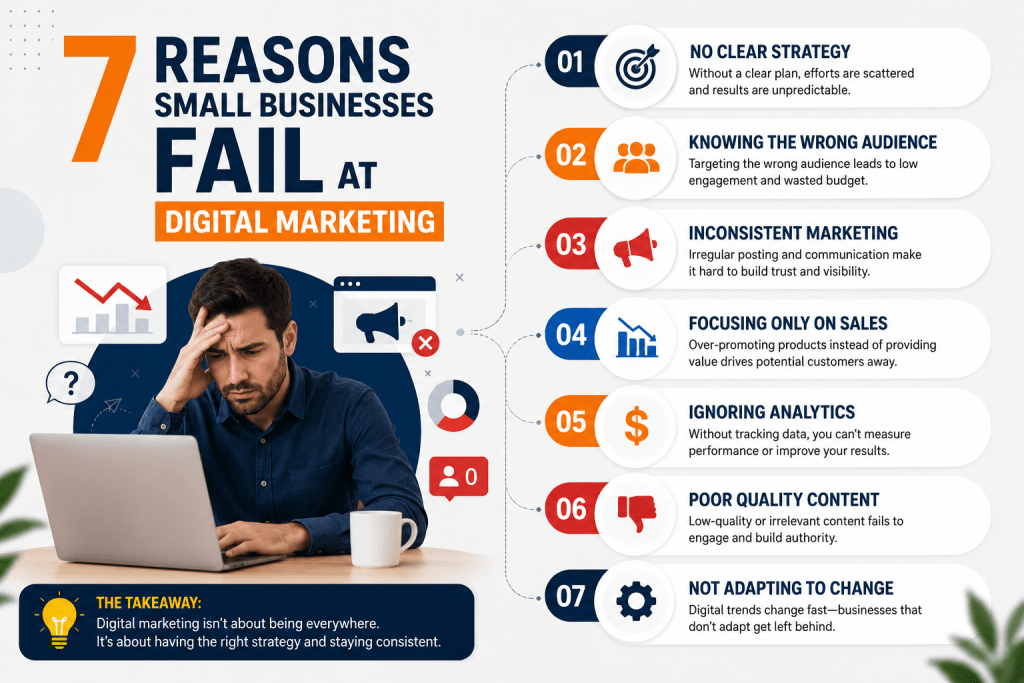
7 Reasons Small Businesses Fail at Digital Marketing in 2026
This isn’t a theoretical list. These are patterns that show up across industries, budgets, and locations.
No Clear Target Audience or Customer Persona Defined
Ask a small business owner who their customer is, and you’ll often hear: “Anyone who needs our product.”
That’s not an audience. That’s a wish.
When you try to talk to everyone, your message connects with no one. Effective digital marketing starts with knowing exactly who you’re trying to reach — their age range, their specific problem, where they spend time online, and what language they use to describe their frustration.
Without this, every rupee spent on ads is a guess.
Trying Every Platform at Once Instead of Mastering One
Instagram. YouTube. WhatsApp. LinkedIn. Google. Twitter. SEO. Email.
Small businesses read that they should “be where their customers are” — and try to be everywhere at once. The result is a half-maintained presence on six platforms, none of them strong enough to actually build trust or generate leads.
The businesses that grow online in 2026 tend to dominate one channel before expanding to another. Pick the platform where your target customer actually spends time, and go deep there first.
Ignoring Data and Running on Gut Feeling Alone
“I think our audience likes motivational quotes.” “I feel like video isn’t working for us.”
Feelings are starting points, not conclusions.
Every platform provides free data — reach, clicks, profile visits, saves, link taps. Most small business owners don’t look at it. Or they look at the vanity metrics (likes, followers) instead of the metrics that matter (leads, calls, purchases).
If you’re not making decisions based on data, you’re not doing digital marketing. You’re doing digital guessing.
No Clear Offer or Call to Action
Most small business content says a lot without asking for anything.
A post about “the importance of good skincare” is fine. But if it doesn’t end with a clear next step — visit this link, book a free consultation, reply with your city — it leaves the reader with no direction.
Every piece of content you publish should have a purpose. Awareness, consideration, or conversion. If you can’t answer which one, the content is probably not doing much.
A Website That Doesn’t Convert
This one is underestimated constantly.
You run an ad. People click. They land on a website that loads slowly, looks broken on mobile, has no clear headline, and buries the contact details at the bottom.
They leave in eight seconds. The ad budget is wasted.
In 2026, a bad website doesn’t just lose you customers — it actively tells people you’re not serious. First impressions online are faster and harsher than ever.
No Consistency Over Time
Digital marketing rewards consistency over perfection.
Most small businesses start strong — posting every day for two weeks, full of energy. Then life gets busy, results feel slow, and the posting slows to once a month.
Algorithms reward consistent activity. Audiences trust consistent presence. The businesses that win long-term are rarely the most creative — they’re usually just the most consistent.
Measuring the Wrong Things
A small business owner shows me their social media report: 10,000 impressions, 400 likes, 80 new followers.
“Is it working?” they ask.
I ask how many customers came from it last month.
Silence.
Impressions and followers are not business results. Inquiries, leads, sales, and repeat customers are. If your marketing metrics don’t connect to revenue, you’re optimizing for the wrong game.
Real-World Examples: What Bad Digital Marketing Looks Like
Theory is helpful. Real examples are better.
A Local Restaurant Spending ₹10,000 on Facebook Ads With No Conversions
A restaurant in a mid-sized Indian city ran Facebook ads promoting their weekend special thali. They targeted all of Delhi, men and women, ages 18–55.
The ad got 4,000 impressions and 80 clicks.
Zero table bookings.
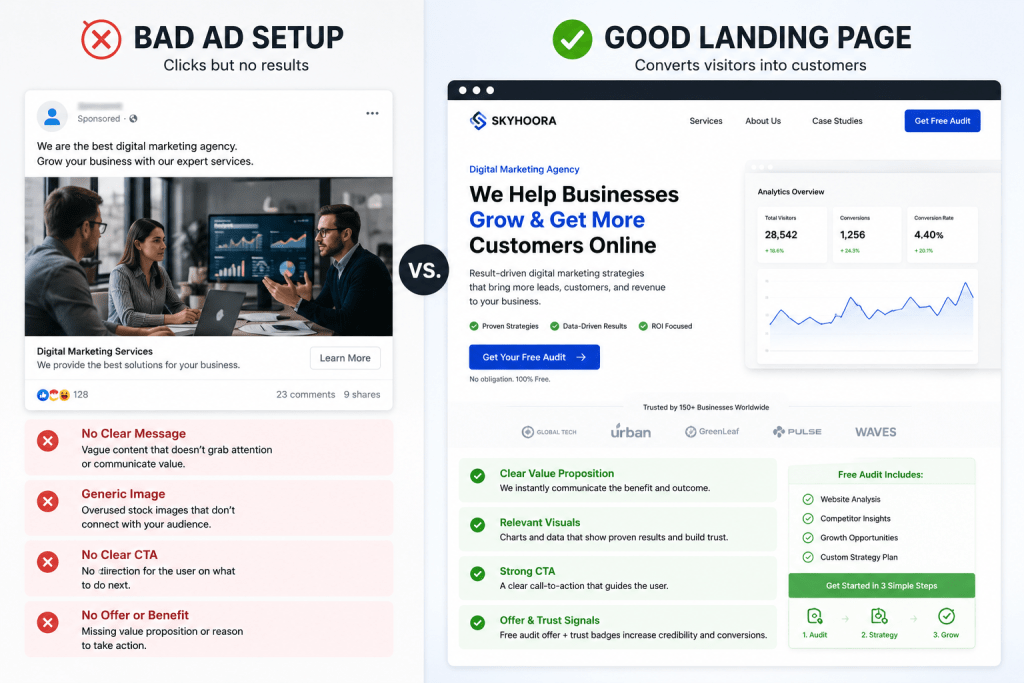
Why? The ad linked to their general Facebook page, not a landing page with a clear call-to-action. The page had no address, no booking link, no phone number visible above the fold. The targeting was so broad it was practically random.
The problem wasn’t the ad creative. It was everything around it.
An E-Commerce Brand Posting Daily but Losing to Competitors With Fewer Posts
A small skincare brand was posting twice daily on Instagram — product photos, reels, stories. Consistent, branded, attractive.
A competitor with half the posting frequency was generating three times the sales.
The difference: the competitor was investing in SEO content, had a well-structured product page, and was running retargeting ads to people who had already visited their website. Volume of content was never the issue.
A Service Business With Great Reviews but Invisible on Google
A freelance interior designer had 40+ five-star Google reviews and a genuine reputation in their city.
But when someone searched “interior designer in [city]” on Google — they appeared on page 3.
No Google Business Profile optimization. No location-specific keywords on the website. No local citations. No blog content targeting local search queries.
Great reputation. Zero discoverability. The two don’t automatically go together.
What Actually Works: A Practical Digital Marketing Fix for Small Businesses
Good news: most of what’s broken is fixable without a big budget. It just requires doing things in the right order.
Step 1 — Know Who You’re Selling To Before You Spend a Single Rupee
Before you write a single post or run a single ad, answer these questions:
- Who is your most likely buyer? Be specific — not “women” but “women aged 28–40 who run small businesses from home.”
- What is the one problem they’re trying to solve?
- Where do they look for solutions — Google, Instagram, YouTube, WhatsApp groups?
- What words do they use to describe the problem?
This exercise takes two hours. It will save you months of wasted effort.
Step 2 — Build One Strong Channel Before Expanding to Three Weak Ones
Pick one platform based on where your audience actually is.
If you’re B2B — LinkedIn and email. If you’re a visual product — Instagram or YouTube Shorts. If you’re a local service — Google Business Profile and local SEO. If you want long-term organic traffic — a blog with solid SEO.
Spend 90 days going deep on that one channel. Create consistently. Engage genuinely. Study what your audience responds to. Get good at it.
Expansion comes later. Focus comes first.
Step 3 — Set Up Basic Tracking So You Know What’s Actually Working
You don’t need a data science degree for this.
At minimum: install Google Analytics 4 on your website. Set up Google Search Console. Check your top-performing posts once a week. Track where your inquiries are actually coming from — ask new customers how they found you.
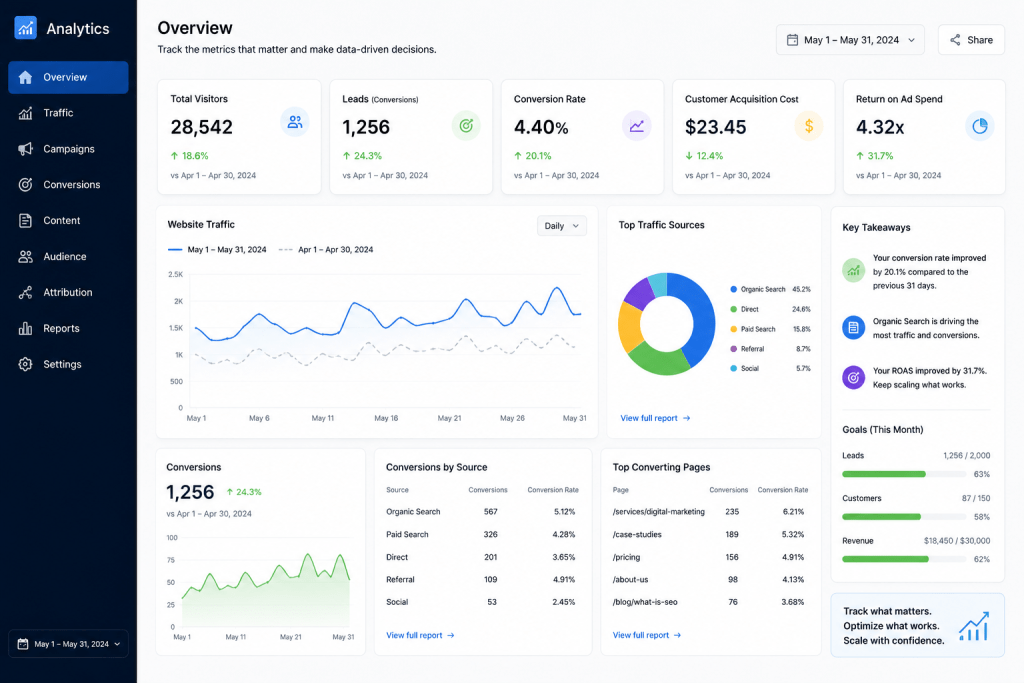
This basic layer of tracking will tell you more in 30 days than a year of guessing.
Common Mistakes to Stop Making Right Now
Copying Big Brand Strategies That Don’t Apply to Small Budgets
Big brands run brand-awareness campaigns because they have millions to spend and they’re maintaining recognition at scale.
You need leads. Next week.
Brand awareness is a luxury when you’re starting out. Focus on direct response — content and ads designed to generate an action (a click, a call, a form submission) not just an impression.
Treating Likes and Followers as Business Results
A business with 500 Instagram followers and 20 paying clients is more successful than a business with 50,000 followers and no revenue.
Followers are potential. Revenue is real.
Stop optimizing for applause. Start optimizing for action.
Delegating Without Understanding
Many small businesses hand their digital marketing to a nephew who “knows social media,” or an agency that sends monthly PDF reports full of impressive-looking numbers.
You don’t need to become a digital marketer yourself. But you do need to understand three things: What are we trying to achieve? How are we measuring it? What happened last month and why?
If you can’t get a clear answer to those three questions, something is wrong — with the person running it, or with the strategy itself.
Step-by-Step Improvement Tips for the Next 60 Days
If you want to see measurable improvement, here’s a realistic sequence:
Week 1–2: Define your audience and audit your current online presence. Google yourself. Go through your website like a first-time visitor. Check your Google Business Profile is complete and accurate.
Week 3–4: Pick one platform and create a 30-day content plan. Not daily — sustainable. Three posts a week of real value beats seven posts of filler.
Week 5–6: Run one small, well-targeted ad — even ₹500 per day — to test your messaging. Send traffic to a specific landing page, not your homepage.
Week 7–8: Review the data. What got clicks? What got ignored? Double down on what worked. Cut what didn’t.
This isn’t a viral hack. But it works — because it’s based on learning, not luck.
Frequently Asked Questions
Why is digital marketing not working for my small business?
The most common reasons are an unclear target audience, no defined strategy, spreading effort across too many platforms, and not tracking results. Most small businesses jump to execution before doing the groundwork.
How much should a small business spend on digital marketing in 2026?
A practical starting point is allocating 5–10% of your monthly revenue to marketing. If you’re pre-revenue, start with free channels — organic content, Google Business Profile, SEO — before moving to paid ads.
Which digital marketing platform works best for small businesses?
It depends on your audience. Local service businesses benefit most from Google Business Profile and local SEO. Product businesses do well on Instagram or YouTube. B2B businesses get better results from LinkedIn and email marketing.
Can small businesses compete with larger companies online?
Yes — especially in niche or local search. Large companies rarely dominate hyper-local keywords or highly specific long-tail searches. A focused, consistent small business can outrank a big competitor on the terms that matter most to their actual customers.
Do I need to hire an agency for digital marketing?
Not necessarily. If you have the time, learning the basics yourself first is valuable. An agency is most useful once you have a proven offer, a working funnel, and a budget to scale. Hiring too early — before you know what works — often leads to wasted spend.
How long does digital marketing take to show results?
Paid ads can generate results within days. SEO and organic content typically take 3–6 months to show measurable traction. Most small businesses underestimate the timeline and quit before the work pays off.
The Businesses That Win Online Aren’t Smarter — They’re Just More Deliberate
Digital marketing in 2026 isn’t more complicated than it was five years ago. It’s just less forgiving of sloppy execution.
The businesses that are struggling aren’t failing because the internet is against them. They’re failing because they skipped the strategy and went straight to tactics — posting without purpose, spending without tracking, and hoping without a plan.
The fix isn’t expensive. It’s disciplined.
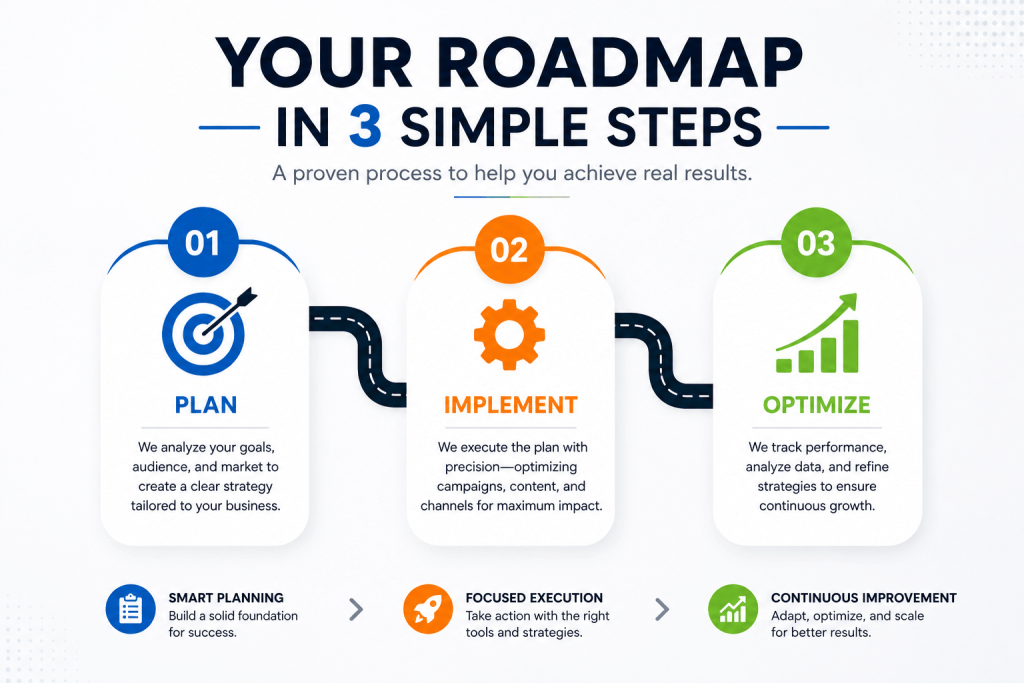
Define your audience. Focus your channels. Track your results. Adjust based on data.
Start with those four things — and the difference in 90 days will surprise you.
Work With Skyhoora
Ready to stop guessing and start growing?
At Skyhoora, we work with small businesses and entrepreneurs to build digital marketing strategies that actually make sense — for their budget, their audience, and their goals.
No jargon. No bloated retainers. No vague monthly reports.
Just clear strategy, honest advice, and real results.
Visit skyhoora.com to get started.
Whether you need a full digital marketing audit, help with ads, or someone to build your entire online presence from the ground up — we’ve got you.